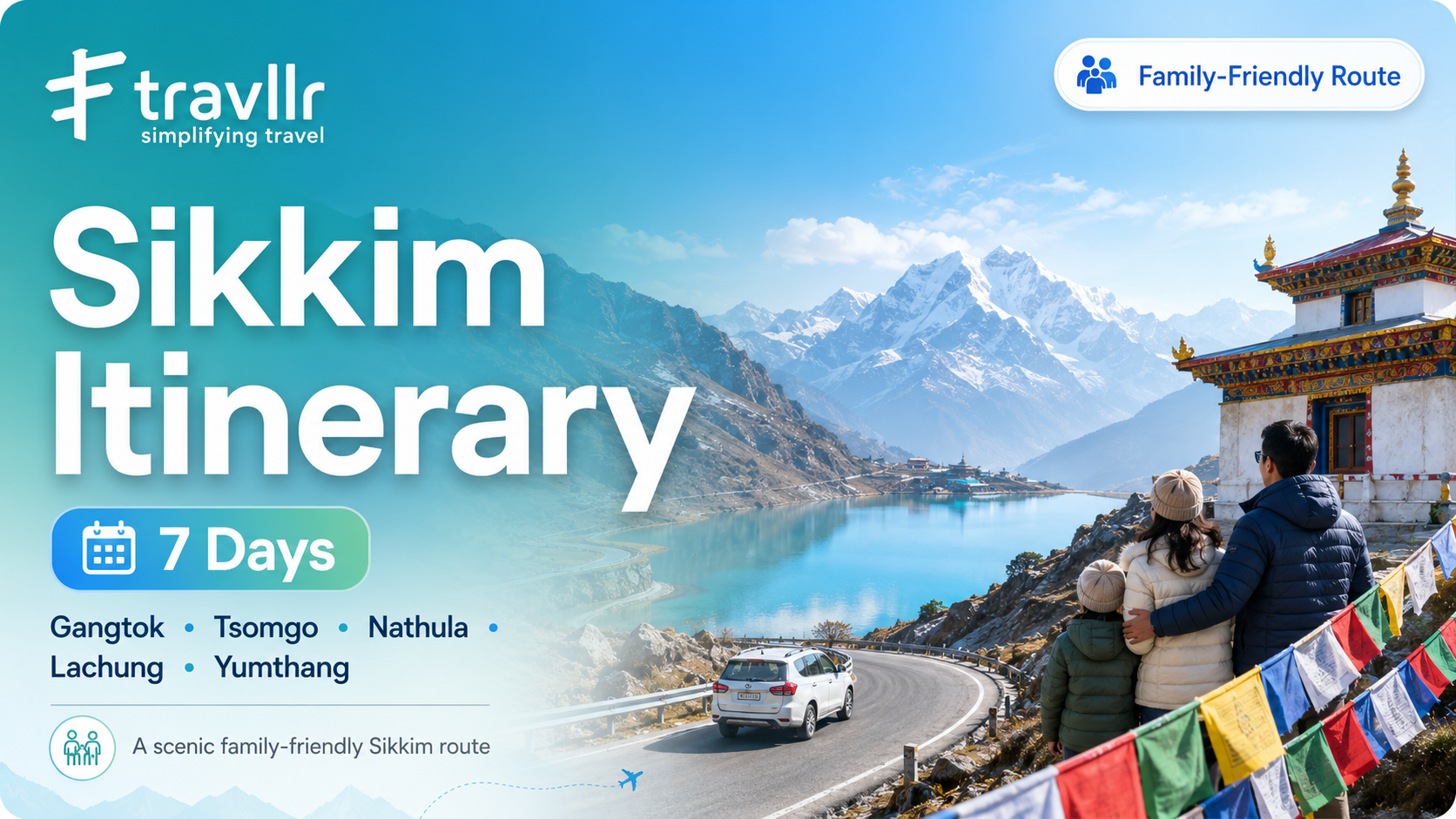
A Sikkim itinerary 7 days works best when you use Gangtok as your main base and add North Sikkim only with proper road and permit planning. The best route for Indian families is Gangtok → Tsomgo Lake → Nathula → Lachung → Yumthang Valley → Gangtok.
This route gives you monasteries, mountain roads, snow points, high-altitude lakes, valleys and North Sikkim beauty without making the trip too rushed.
Why Sikkim Is Not a Regular Hill Station Trip
Sikkim is not like a simple weekend trip to a hill station.
You do not just book a hotel, reach the destination and start sightseeing.
Sikkim needs better planning.
- You need permits for certain areas.
- You need road-condition checks.
- You need buffer time for weather.
- You need comfortable vehicles.
- You need proper pacing for kids and seniors.
- You need warm clothes even when the plains feel hot.
- You need to understand altitude before adding every high point.
That is why a Sikkim trip should not feel random.
It should feel calm, spiritual and scenic — but also practical.
A good Sikkim plan does not rush you through every place.
It gives you time to enjoy the mountains properly.
Sikkim Itinerary 7 Days: Quick Snapshot
| Trip Detail | Recommended Plan |
|---|---|
| Ideal duration | 6 nights / 7 days |
| Best route | Gangtok → Tsomgo → Nathula → Lachung → Yumthang → Gangtok |
| Best for | Families, couples, seniors, nature lovers, North East first-timers |
| Starting point | Bagdogra Airport / NJP Railway Station |
| Main base | Gangtok |
| North Sikkim base | Lachung |
| Permits | Required for Tsomgo, Nathula and North Sikkim routes |
| Best months | March to May and October to December |
| Road comfort | Moderate to difficult in North Sikkim |
| Food comfort | Good in Gangtok, basic in North Sikkim |
| Main CTA | Plan Sikkim with Travllr |
Who Should Choose This Sikkim Route?
Choose this route if:
- You want your first proper Sikkim trip.
- You want Gangtok plus North Sikkim.
- You want snow-point possibilities.
- You want valleys, lakes and mountain drives.
- You want a family-friendly route.
- You want a spiritual and scenic holiday.
- You can handle long road journeys.
- You want a cleaner alternative to crowded hill stations.
This route works beautifully for travellers who want nature, calm and Himalayan views.
Who Should Skip This Route?
This route may not suit you if:
- You dislike long road travel.
- You have serious motion sickness.
- You travel with very small kids.
- You travel with seniors who cannot handle rough roads.
- You want luxury hotels everywhere.
- You want nightlife and shopping-heavy travel.
- You cannot handle cold weather.
- You want a very relaxed no-road-trip holiday.
In that case, Travllr may suggest a softer Sikkim route with Gangtok + Pelling + Namchi instead of North Sikkim.
North Sikkim looks beautiful, but it needs road comfort.
Best 7-Day Sikkim Route
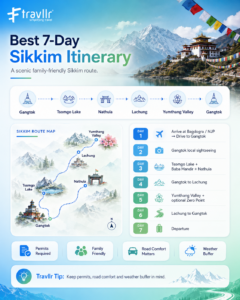
For first-time travellers, Travllr recommends this route:
Day 1: Reach Gangtok
Day 2: Gangtok local sightseeing
Day 3: Tsomgo Lake, Baba Mandir and Nathula
Day 4: Gangtok to Lachung
Day 5: Yumthang Valley and Lachung
Day 6: Lachung to Gangtok
Day 7: Departure
This route gives you a strong Sikkim experience without adding too many bases.
You get Gangtok comfort first.
Then you move to North Sikkim.
Then you return with a buffer before departure.
That buffer matters because mountain roads can change quickly.
7-Day Sikkim Itinerary
Day 1: Arrive at Bagdogra / NJP and Drive to Gangtok
Your Sikkim trip usually starts from Bagdogra Airport or NJP Railway Station.
From there, you drive to Gangtok.
This drive can take several hours depending on traffic, weather and road conditions.
Keep Day 1 simple.
Plan:
- Airport or station pickup
- Drive to Gangtok
- Hotel check-in
- Evening rest
- MG Marg walk, if time allows
- Early dinner
Do not add sightseeing on Day 1.
Most travellers feel tired after the road journey.
Travllr tip: Choose a hotel near MG Marg if you want easy evening walks, cafés and shopping access.
Day 2: Gangtok Local Sightseeing
Use Day 2 to enjoy Gangtok at a comfortable pace.
Gangtok has monasteries, viewpoints, cafés, ropeway views and a clean mountain-town feel.
Add these places:
- Rumtek Monastery or Enchey Monastery
- Ganesh Tok
- Hanuman Tok
- Tashi View Point
- Banjhakri Falls
- Namgyal Institute of Tibetology
- Do Drul Chorten
- Gangtok Ropeway
- MG Marg evening
Do not add everything if you travel with seniors or kids.
Gangtok sightseeing should feel calm.
It should not feel like a race.
Travllr Day 2 Tip
Keep MG Marg for the evening.
Families enjoy it because it has food, shopping, lights and easy walking.
Day 3: Tsomgo Lake, Baba Mandir and Nathula
Day 3 gives you the classic East Sikkim mountain experience.
You visit:
- Tsomgo Lake
- Baba Mandir
- Nathula Pass, if permit and weather allow
This day needs permits and weather checks.
Travllr should arrange permits in advance through the local operator.
Travellers should carry:
- Government ID
- Passport-size photos, if needed
- Warm jacket
- Gloves
- Comfortable shoes
- Medicines
- Snacks
- Water
- Sunglasses
- Cash
Important Nathula Note
Nathula is not guaranteed every day.
Weather, permits, road conditions and official restrictions can affect access.
Travllr should never promise Nathula blindly.
Instead, Travllr should say:
“We will apply and plan for Nathula, subject to permit, weather and road conditions.”
That builds trust.
Day 4: Gangtok to Lachung
Day 4 takes you from Gangtok to Lachung.
This is a long mountain drive.
The route feels scenic, but it can also feel tiring.
You may see:
- Teesta River views
- Mountain roads
- Waterfalls
- Small villages
- Valley views
- Changing landscapes
Keep this day as a transfer day.
Do not add too many stops.
Plan:
- Breakfast
- Permit check
- Drive to Lachung
- Lunch stop on route
- Waterfall stops, if safe
- Hotel check-in
- Dinner
- Early rest
Lachung stays are usually simpler than Gangtok stays.
Do not expect luxury-city comfort here.
You come to Lachung for location and nature.
Not hotel glamour.
Day 5: Yumthang Valley and Optional Zero Point
Day 5 is the main North Sikkim experience.
Yumthang Valley gives you one of the most beautiful Sikkim landscapes.
You get mountains, open valley views, rivers, flowers in season and snow possibilities depending on the month.
Plan:
- Early breakfast
- Drive to Yumthang Valley
- Valley sightseeing
- Hot spring area, if included
- Optional Zero Point, if road and permit allow
- Return to Lachung
- Rest
- Dinner
Should You Add Zero Point?
Add Zero Point only if:
- Road conditions look safe.
- The group can handle altitude.
- Weather looks manageable.
- Kids and seniors feel comfortable.
- The driver and local team recommend it.
Skip Zero Point if:
- The weather looks bad.
- Travellers feel tired.
- Seniors struggle with altitude.
- Kids feel uncomfortable.
- Road conditions look risky.
Travllr should treat Zero Point as optional, not compulsory.
The goal is a good trip, not forced bragging rights.
Day 6: Lachung to Gangtok
Day 6 brings you back to Gangtok.
This is another long road day.
Start early.
Plan:
- Breakfast
- Checkout
- Drive back to Gangtok
- Lunch stop on route
- Hotel check-in
- Evening rest
- MG Marg dinner or shopping
Do not add major sightseeing on this day.
After two North Sikkim road days, travellers need rest.
Travllr should keep Day 6 soft, especially for families and seniors.
Day 7: Departure from Gangtok
Keep the final day practical.
Plan:
- Breakfast
- Checkout
- Drive to Bagdogra Airport or NJP Railway Station
- Return journey
Book flights or trains carefully.
Do not choose a very early flight from Bagdogra if you are leaving from Gangtok the same morning.
The road journey takes time, and delays can happen.
Travllr tip: Choose afternoon or evening departures where possible.
A rushed final day can spoil an otherwise beautiful trip.
Sikkim Permit Guide for Indian Travellers
Sikkim has sensitive border areas, so certain places need permits.
For Indian travellers, permits usually apply for:
- Tsomgo Lake
- Baba Mandir
- Nathula
- Lachung
- Yumthang Valley
- Zero Point
- Some North Sikkim and East Sikkim routes
Travllr should help collect documents before the trip.
Commonly needed items may include:
- Government photo ID
- Passport-size photos
- Traveller details
- Vehicle details
- Hotel details
- Local operator coordination
Permit rules can change, so Travllr should verify the latest local requirements before every departure.
Do not treat permits as a last-minute formality.
They decide the route.
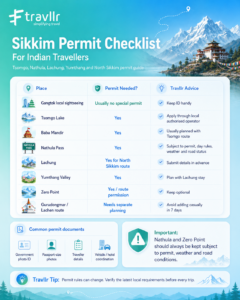
Permit Checklist
| Place | Permit Needed? | Travllr Advice |
|---|---|---|
| Gangtok local sightseeing | Usually no special permit | Keep ID handy |
| Tsomgo Lake | Yes | Apply through local authorised operator |
| Baba Mandir | Yes | Usually planned with Tsomgo route |
| Nathula Pass | Yes | Subject to permit, day rules, weather and road status |
| Lachung | Yes for North Sikkim route | Submit details in advance |
| Yumthang Valley | Yes | Plan with Lachung stay |
| Zero Point | Yes / route permission | Keep optional |
| Gurudongmar / Lachen route | Needs separate planning | Avoid adding casually in 7 days |
Travllr should explain permits clearly before booking.
A good Sikkim package should not say “all sightseeing included” without permit conditions.
Best Time to Visit Sikkim
Sikkim changes by season.
Your best time depends on what you want.
| Season | Months | Best For | Watch Out For |
|---|---|---|---|
| Spring | March to May | Rhododendrons, pleasant weather, valleys | Higher demand |
| Summer | May to June | Families, school holidays, clear towns | Crowds and higher prices |
| Monsoon | July to September | Green views, waterfalls | Landslides, road closures, permit disruption |
| Autumn | October to November | Clear skies, mountain views | Peak-season pricing |
| Winter | December to February | Snow experience, cold weather | Road closures, high-altitude access issues |
Travllr recommendation:
Choose March to May for flowers and pleasant weather.
Choose October to November for clearer mountain views.
Choose December to February only if you can handle cold weather and flexible road plans.
Avoid monsoon for North Sikkim unless you accept road-risk delays.
Road Comfort: What Indian Families Should Know
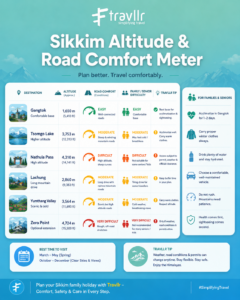
Sikkim is beautiful, but road travel can feel tiring.
Mountain roads have:
- Sharp turns
- Narrow patches
- Weather delays
- Occasional landslides
- Long drives
- Early starts
- Altitude changes
- Limited food stops in remote areas
Families should prepare properly.
Carry:
- Motion sickness medicine
- Light snacks
- Water
- Warm clothes
- Basic medicines
- Comfortable shoes
- Power bank
- Small day bag
- Cash
- ID documents
- Rain jacket
Travllr should not hide road difficulty.
A traveller who knows the reality enjoys the trip better.
Altitude and Health Comfort
Sikkim’s high-altitude areas can affect some travellers.
Tsomgo Lake, Nathula and Zero Point sit at higher elevations than Gangtok.
Some travellers may feel:
- Breathlessness
- Headache
- Nausea
- Dizziness
- Cold discomfort
- Fatigue
Travllr should advise families to move slowly, stay hydrated and avoid pushing high-altitude points if someone feels unwell.
Do not force kids, seniors or unwell travellers to complete every stop.
Health comes first.
Sightseeing comes second.
Sikkim with Senior Citizens
Sikkim can work for seniors, but the route needs care.
Senior travellers may enjoy Gangtok, monasteries, viewpoints and MG Marg.
North Sikkim can feel tiring because of long roads and basic stays.
Travllr should check:
- Walking comfort
- Motion sickness
- Altitude comfort
- Hotel lift availability
- Food timing
- Road journey tolerance
- Medical needs
- Warm clothing
- Rest time
For seniors, choose comfort over coverage.
A softer route like Gangtok + Pelling + Namchi may work better than North Sikkim for some families.
Sikkim with Kids
Kids enjoy Sikkim when the itinerary stays balanced.
They may like:
- Tsomgo snow
- Ropeway
- MG Marg
- Waterfalls
- Yak rides, where available
- Open valleys
- Short scenic stops
But kids may struggle with:
- Long drives
- Cold weather
- Altitude
- Motion sickness
- Early starts
- Basic food options in remote areas
Travllr should keep snacks, medicines and breaks ready.
Do not make every day heavy.
Food in Sikkim
Gangtok offers good food options.
You can find vegetarian food, cafés, momos, thukpa, Indian meals and simple family-friendly restaurants.
North Sikkim has more basic food.
Lachung hotels usually provide simple meals.
Do not expect the same food variety as Gangtok.
Vegetarian travellers should tell Travllr in advance.
Jain travellers should plan carefully because remote areas may not support strict Jain food easily.
Carry backup snacks.
Good options include:
- Khakhra
- Thepla
- Dry fruits
- Makhana
- Biscuits
- Energy bars
- Tea sachets
- Medicines
- ORS
Travllr should check meal requirements before confirming North Sikkim stays.
What to Pack for 7 Days in Sikkim
Pack smartly.
Carry:
- Warm jacket
- Thermals in winter
- Gloves
- Woollen cap
- Comfortable shoes
- Socks
- Rain jacket
- Sunglasses
- Sunscreen
- Moisturiser
- Lip balm
- Medicines
- Motion sickness tablets
- ID proof
- Passport photos, if needed
- Power bank
- Cash
- Snacks
- Reusable bottle
- Small backpack
Avoid heavy luggage.
Mountain trips feel easier when you travel light.
Sikkim Trip Cost for 7 Days
A 7-day Sikkim trip cost depends on hotel category, vehicle type, season, North Sikkim permits and group size.
| Travel Style | Approx Cost Per Person | What to Expect |
|---|---|---|
| Budget | ₹28,000 – ₹38,000 | Basic hotels, shared/simple vehicle, standard sightseeing |
| Comfort | ₹40,000 – ₹60,000 | Better hotels in Gangtok, private vehicle, North Sikkim planning |
| Premium | ₹65,000 – ₹90,000+ | Better stays, private transfers, slower pace, upgraded comfort |
| Luxury-light | ₹1 lakh+ | Premium hotels where available, curated experiences, better pacing |
These are planning ranges only.
Actual cost changes by:
- Departure city
- Flights to Bagdogra
- quality
- Vehicle type
- Season
- Permit access
- North Sikkim route status
- Meals
- Group size
- Driver and local operator quality
Travllr should show the full cost clearly, including vehicle, permits, hotels and meals.
Sikkim Route Alternatives
Not every traveller should choose the same route.
| Route | Best For | Travllr Verdict |
|---|---|---|
| Gangtok + Tsomgo + Nathula + Lachung + Yumthang | First-time active families | Best full 7-day Sikkim route |
| Gangtok + Pelling + Namchi | Seniors and relaxed families | Softer, more comfortable route |
| Gangtok + Lachung only | Nature lovers | Good if roads are stable |
| Gangtok + Lachen + Gurudongmar + Lachung | Active travellers | Needs more days and stronger altitude comfort |
| Gangtok only | Short trips | Good for 3–4 days |
| Pelling + Gangtok | Mountain views and monasteries | Good for comfort travellers |
Travllr should choose the route based on the people travelling.
Do not force North Sikkim into every package.
Common Sikkim Planning Mistakes
Mistake 1: Adding too much in 7 days
Sikkim roads take time.
Do not add Pelling, Lachen, Lachung, Gangtok and Namchi all together in 7 days.
Mistake 2: Treating Nathula as guaranteed
Nathula depends on permits, weather and official access.
Keep it subject to conditions.
Mistake 3: Ignoring North Sikkim road comfort
North Sikkim is beautiful but tiring.
Prepare properly.
Mistake 4: Booking tight return flights
Do not choose early flights from Bagdogra on the final day.
Mistake 5: Travelling in monsoon without flexibility
Monsoon can affect road access.
Keep buffer days if you travel then.
Mistake 6: Expecting luxury everywhere
Gangtok has better hotel options. North Sikkim stays can feel basic.
Mistake 7: Not carrying warm clothes
High-altitude areas can feel cold even when Gangtok feels pleasant.
Mistake 8: Not planning food
Vegetarian and Jain travellers should carry backup snacks and inform the planner early.
Travllr Verdict
A Sikkim itinerary 7 days works best when you balance beauty with road reality.
For active Indian families, Travllr recommends:
Gangtok → Tsomgo Lake → Nathula → Lachung → Yumthang Valley → Gangtok
This route gives you the best mix of Gangtok comfort, East Sikkim highlights and North Sikkim scenery.
But do not plan it blindly.
- Check permits.
- Check road conditions.
- Check weather.
- Check altitude comfort.
- Check senior and kid suitability.
- Check food needs.
- Check return timing.
Choose North Sikkim if your group can handle road travel.
Choose a softer Gangtok-Pelling-Namchi route if comfort matters more than coverage.
That is how Sikkim becomes peaceful, not stressful.
FAQs
1. What is the best Sikkim itinerary for 7 days?
The best 7-day Sikkim itinerary for first-time travellers is Gangtok, Tsomgo Lake, Nathula, Lachung and Yumthang Valley. This route gives a strong mix of city comfort, monasteries, high-altitude lakes, mountain roads and North Sikkim valleys.
2. Is 7 days enough for Sikkim?
Yes, 7 days are enough for Gangtok, Tsomgo, Nathula, Lachung and Yumthang. Do not add too many extra places like Pelling, Namchi, Lachen and Gurudongmar unless you have more days.
3. Do Indians need permits for Sikkim?
Indian travellers need permits for certain restricted areas like Tsomgo Lake, Nathula, Lachung, Yumthang and other North Sikkim routes. Travllr should verify the latest permit rules before travel.
4. Is Nathula Pass guaranteed in a Sikkim package?
No, Nathula Pass is not guaranteed. Permit availability, weather, road conditions and official restrictions can affect access. Travllr should always keep Nathula subject to conditions.
5. What is the best time to visit Sikkim?
March to May and October to November work best for most Sikkim trips. Spring gives flowers and pleasant weather, while autumn gives clearer mountain views. Winter works for snow lovers, but roads may close.
6. Is North Sikkim suitable for senior citizens?
North Sikkim can feel tiring for senior citizens because of long road journeys, altitude and basic stays. Some seniors can manage it, but Travllr should check health, road comfort and food needs before recommending it.
7. Is Sikkim good for kids?
Yes, Sikkim can work well for kids if the itinerary stays balanced. Families should carry warm clothes, snacks, medicines and motion sickness support. Avoid making every day road-heavy.
8. How much does a 7-day Sikkim trip cost?
A 7-day Sikkim trip usually costs around ₹28,000 to ₹60,000 per person for budget-to-comfort travel, excluding flights to Bagdogra if needed. Premium trips can cost more depending on hotels, vehicle, season and route.
Conclusion
Sikkim gives you mountains, peace, monasteries, snow points, valleys and a very different side of India.
But you must plan it properly.
Do not treat it like a normal hill station trip.
Sikkim needs permits, weather checks, road planning, food planning and realistic pacing.
For a first-time 7-day trip, Travllr recommends:
Gangtok → Tsomgo Lake → Nathula → Lachung → Yumthang Valley → Gangtok
This route gives you the best Sikkim experience if your group can handle mountain roads.
If you travel with seniors, small kids or comfort-first travellers, ask Travllr for a softer route.
Plan Sikkim with Travllr and get a curated 7-day route with permits, hotels, vehicle, food planning, road comfort and weather-aware guidance.
Leave a Reply